OpenAI shipped ChatGPT Images 2.5 on September 8, 2026, two days ago, with no staged beta and no waitlist — it simply appeared inside ChatGPT for everyone, free tier included, alongside two new API models named Flare and Sunburst. The internet's first reaction was a wave of remixed "80s flashback" portraits. The second reaction, from anyone who actually ships images for a living, was a harder question: is this a real upgrade or a version-number bump?
The verdict: it's a real upgrade, but a narrow one. The gains are concentrated in editing precision, small-detail rendering, and speed — not in raw creative range. If you edit the same image five times and need the first four changes to survive, 2.5 is meaningfully better than 2.0. If you generate one-shot concept art and never touch it again, you will struggle to justify the top quality tiers, which cost roughly four times what the old ceiling did.
This review covers what genuinely changed at spec level, where the model earns its keep, where it doesn't, and how to run it without a ChatGPT subscription.
What's Actually New
The product is called ChatGPT Images 2.5 inside the app. In the API it splits into two models: gpt-image-2.5-flare and gpt-image-2.5-sunburst, both with snapshots dated 2026-09-08. People searching for it write it a dozen ways — "chatgpt image 2.5", "gptimage2.5", "gpt image 2.5" — but it's one release. It succeeds ChatGPT Images 2.0 from April 2026, and it continues the GPT Image line that replaced DALL·E. Architecturally it stays autoregressive and multimodal rather than diffusion-based, which is why it follows long, fussy instructions better than most competitors and why it renders text more reliably.
The concrete, checkable changes:
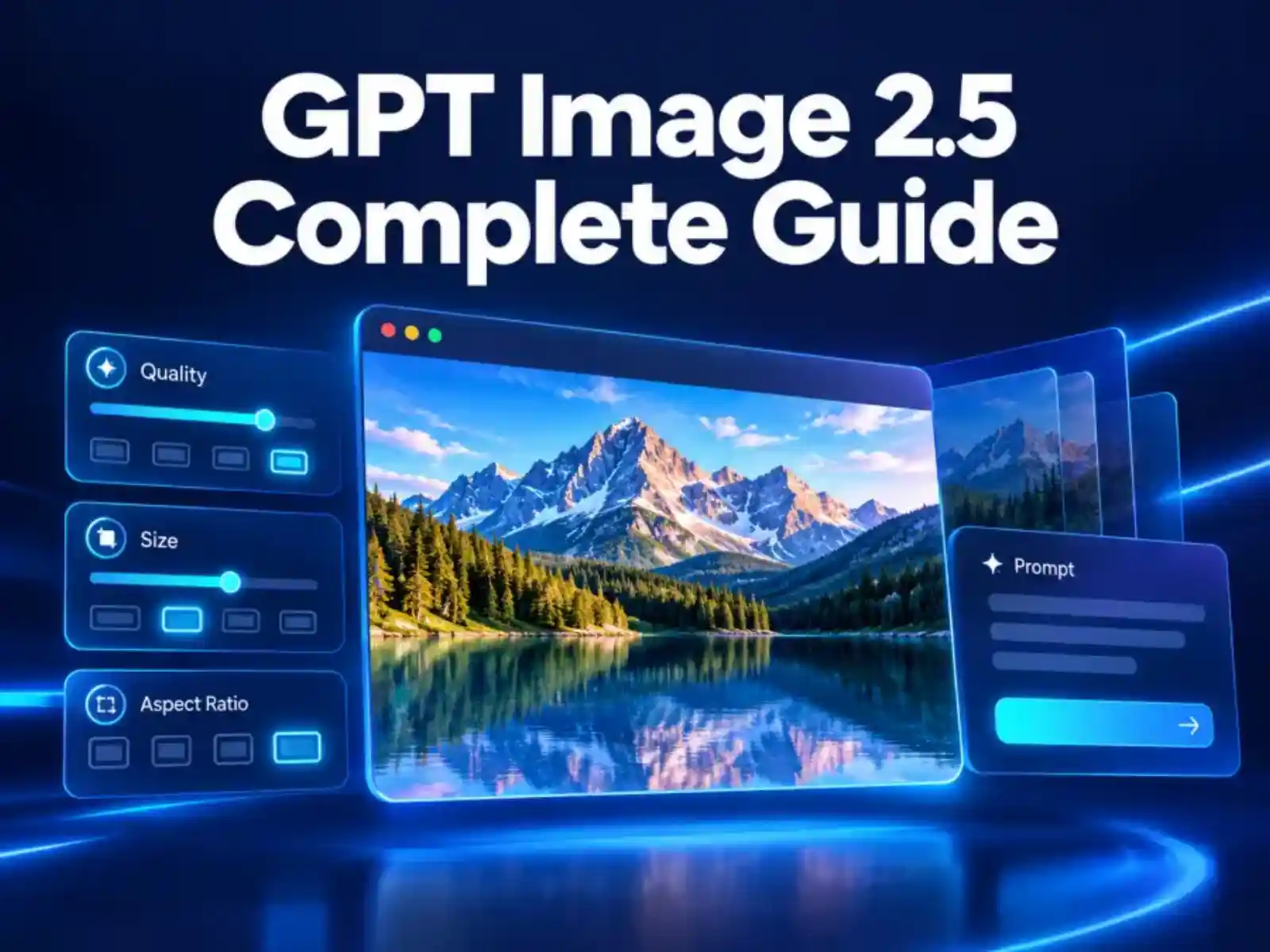
Two new quality tiers. Images 2.0 topped out at high. Version 2.5 adds xhigh and max above it, with low, medium, high, and auto still available. This is the single biggest practical difference — and, as you'll see below, the single biggest cost trap.
Transparent backgrounds. PNG and WebP output with real alpha channels, which removes an entire background-removal step from sticker, logo, and product-cutout workflows.
Custom sizes with real constraints. Each edge must be a multiple of 16. The maximum edge is 3840px. The aspect ratio can't exceed 3:1, and total pixel count must land between 655,360 and 8,294,400. OpenAI labels anything above 2560×1440 experimental — that qualifier matters and I'll come back to it.
Speed. OpenAI claims up to 50% lower latency than 2.0, and describes Flare as roughly 2–4× faster than GPT-Image-2 at comparable or better quality.
Editing behavior. OpenAI's headline claim is surgical edits: change only the element you asked about, leave everything else untouched. Multi-turn edits are supposed to hold earlier changes rather than quietly re-rolling them, and subject preservation from reference photos is described as more reliable.
On the app side, ChatGPT gained @Sketch (draw a rough shape in the chat and have the model build from it), Templates for posters, merch, flyers, and stickers, comment-based region edits where you annotate a spot on the image and describe the fix, and prompt sharing and remixing — the mechanism behind the viral 80s trend. Access spans all ChatGPT tiers including free with rate limits, the API via v1/images/generations and v1/images/edits, Codex, and Adobe Firefly.
Independent signal: at launch, LM Arena placed Sunburst first at roughly 1421 and Flare second at roughly 1399 in text-to-image, with the same ordering on the edit arenas. Read that with a caveat — both entries carried preliminary labels on vote counts in the low thousands, against roughly 78,700 votes behind GPT-Image-2's score. Early arena placement is a signal, not a settled result.
OpenAI also says more than 3 billion images per week now get created across ChatGPT Images and the GPT-Image API, which is context for why the speed work mattered to them at all.
Where It Shines
Small print and typography
This is the clearest win, and it's the one you can verify yourself in under five minutes. Packaging labels, ingredient lists, book spines, UI mockups with real button text, price tags — the categories where 2.0 produced convincing-at-a-glance gibberish that fell apart when you zoomed in. Version 2.5 holds character shapes at smaller sizes. It is still not a typesetting engine, and long paragraphs will still degrade, but the failure threshold moved from "any text under 20px" to something much more usable.
Reproducible test: write one prompt containing a specific short string — a product name, a price, a two-word tagline — and run it at Draft and then at Ultra on the GPT Image 2.5 online . Zoom to 100% on both. The gap between those two outputs tells you more about whether this model fits your work than any benchmark score will.
Iterative editing that doesn't drift
The failure mode everyone knows: you ask for a different shirt color, and the model returns a different shirt color plus a subtly different face, a moved shadow, and a background object that vanished. That drift is what makes AI image editing exhausting for real production work, because every round costs you a re-check of the entire frame.
OpenAI's precision-editing claim targets exactly this, and it's the area where 2.5 feels most like a different product rather than a tuned one. Multi-turn sequences — change the background, then the lighting, then one product detail — hold together across more rounds than before. Not perfectly. But the number of edits you can chain before the image quietly becomes a different image went up.
Reference-based subject consistency
Feed a reference photo of a person or a product and 2.5 keeps the identifying details more stubbornly across generations. For anyone building a character across a series of images, or shooting a product line where the object has to be the same object in twelve frames, this is the difference between a workflow and a lottery.
The realistic caveat: hard transformations — big pose changes, dramatic lighting shifts, unusual angles — still take several attempts. "More reliable" is not "solved."
Transparent-background asset production
Underrated at launch, genuinely useful daily. Sticker packs, app icons, logo explorations, product cutouts for composites, overlay graphics for video. Previously each of these ended with a background-removal pass and some edge cleanup. Now the alpha channel comes out of the model. On a batch of thirty assets, that's an afternoon saved.
Where It Falls Short
An honest review has to spend real space here, because the marketing page won't.
The max tier is expensive enough to change how you work. A rough 1024×1024 generation costs about $0.006 at low and about $0.053 at high — but roughly $0.21 at max. That's around 4× the old ceiling per image. At max, casual iteration stops being casual. You end up prototyping cheap and only spending on the final render, which is a sensible discipline but not the frictionless experience the launch messaging implies.
No Batch API at launch. Neither Flare nor Sunburst supports batch processing, so the discount that high-volume pipelines relied on with the previous generation isn't available. If your product generates thousands of images on a schedule, your unit economics just got worse, not better, until this ships.
Above 2560×1440 is labeled experimental — treat that literally. The 3840px max edge reads like a headline feature, but OpenAI's own qualifier is doing work. Expect longer generations, higher cost, and more artifacts at the top of the range. For print-resolution output, generating at a safe size and upscaling separately remains the more predictable path.
Extra micro-detail can fight video pipelines. This one catches people off guard. The sharper textures and finer detail that make a still image look better become a liability when that image becomes the first frame of an image-to-video generation. Video models have to interpolate motion across all that detail, and high-frequency texture is exactly what tends to shimmer, crawl, or dissolve between frames. If your image is a means to a video, a slightly softer render at a lower tier often produces a cleaner clip than a max-tier still.
OpenAI publishes no average price-per-image figure, and no documentation explaining when ChatGPT itself routes you to Flare versus Sunburst. For an API user that's an annoyance. For a ChatGPT user it means you can't reliably know which model produced your image.
Editing strictness isn't uniform across the product. Early reporting from The Decoder found that the strict "change only what's asked" behavior showed up consistently in ChatGPT Work and higher-tier settings, while standard Chat mode still altered unintended details during edit rounds. Same version number, different experience depending on where you're sitting.
And the base limitation hasn't moved: this is a moderated, hosted model. Prompt and output filtering apply. Brand logos, named public figures, and a range of legitimate-but-restricted subjects still get refused, exactly as they did in 2.0.
Flare vs Sunburst: Which One You're Actually Getting
Two models, one release, and most people will never consciously choose between them.
|
gpt-image-2.5-flare |
gpt-image-2.5-sunburst |
| Positioning |
Fast default for most work |
Highest quality and edit precision |
| Speed |
Reported 2–4× faster than GPT-Image-2 |
Slower; built for high-stakes output |
| Best for |
Social content, prototyping, visual search, high volume |
Campaign creative, product photography, multi-round edits |
| LM Arena at launch |
#2, ~1399 (preliminary) |
#1, ~1421 (preliminary) |
| API endpoints |
v1/images/generations, v1/images/edits |
Same |
| Token pricing |
Identical |
Identical |
| Batch API |
Not supported |
Not supported |
The pricing line is the important one: both models bill at the same token rates. Sunburst does not cost more per token than Flare. What it costs you is time, and in practice it tends to be paired with the higher quality tiers, which is where the real money goes.
Inside ChatGPT you don't pick. The app decides, OpenAI hasn't documented the routing logic, and the general expectation is that Flare handles the default path while heavier editing work pulls Sunburst. If you need to know which model produced a given image, the API is the only place you get that certainty.
For most people the practical rule is short: use Flare unless you're doing precision editing on an asset that someone will inspect closely. Sunburst is for the frame that goes on the homepage, not the forty frames you generated to find it.
What It Costs in Practice
Two routes, two very different cost shapes.
Through the API, both models bill per 1M tokens at the same rates as GPT Image 2:
| Token type |
Rate per 1M |
Cached |
| Text input |
$5.00 |
$1.25 |
| Image input |
$8.00 |
$2.00 |
| Image output |
$30.00 |
— |
Because output tokens scale with quality tier and resolution, the tier you pick is the whole ballgame. Rough figures for a 1024×1024 generation:
| Quality tier |
Approx. cost per image |
| low |
~$0.006 |
| high |
~$0.053 |
| max |
~$0.21 |
That's a 35× spread across the same model on the same prompt. Anyone integrating this should default to a lower tier and escalate deliberately, not the other way around.
Through the browser, this site runs GPT Image 2.5 on its GPT Image 2.5 tool page with three modes — Draft, Standard, and Ultra — priced in credits, with image-to-image costing the same as text-to-image:
| Resolution |
Draft |
Standard |
Ultra |
| 1K |
4 credits |
6 credits |
22 credits |
| 2K |
5 credits |
8 credits |
24 credits |
| 4K |
6 credits |
14 credits |
42 credits |
Notice the shape of that table: at Draft, resolution barely costs anything (4 to 6 credits from 1K to 4K), while Ultra roughly doubles from 1K to 4K. Draft at 4K is one of the better value points in the grid if you need size more than polish.
Credits come from a few places. The free daily check-in yields 30 credits a week, which is about five Standard 1K images of GPT Image 2.5 per week — enough to evaluate the model honestly before paying anything. One-time packs start at $9.90 for 80 credits and never expire. Monthly plans run Basic at $11.90 for 100 credits, Standard at $29.90 for 300 credits — roughly 50 Standard 1K images, with a commercial license and no watermark — and Pro from $59.90. Full breakdown on the pricing page.
The honest comparison: if you're generating thousands of images a month on a schedule, the raw API is cheaper per image, and that's what it exists for. The browser route buys you no API key, no billing setup, no code, and the ability to run the same prompt through GPT Image 2 at 3 credits per 1K image, Nano Banana Pro, Nano Banana 2, Seedream 5.0, or any of a dozen-plus other models with a dropdown change. For evaluating whether 2.5 is worth it at all, that switchability is worth more than the per-image rate.
See the upgrade for yourself: run one prompt at Draft, then again at Ultra.
Try GPT Image 2.5 →
Who Should Use It, and Who Shouldn't
Use GPT Image 2.5 if your work involves visible text in images — packaging, posters, mockups, UI. If you edit images in rounds rather than generating them once. If you need one subject to stay recognizably itself across a set. If you produce transparent-background assets in volume. If you were already on 2.0 and the drift during editing was your main complaint, this release is aimed squarely at you.
Skip it, or at least don't reach for the top tiers, if you're producing stylized or illustrative work where micro-detail isn't the point — several competing models are cheaper and equally good there. If your images feed a video pipeline, where the extra detail can work against you. If you run high-volume batch generation, since the Batch API isn't available yet. If you need print-resolution output today, given the experimental label above 2560×1440. And if you're on a tight budget generating single-shot images, high on 2.5 or a lower-tier alternative will serve you better than max will.
As for gpt image 2.5 vs 2.0 specifically: the short version is that 2.0 remains perfectly capable for straightforward one-shot generation, and 2.5's advantages concentrate in editing, fine detail, and speed. If those three things aren't your bottleneck, the upgrade is optional. That comparison deserves its own side-by-side, and it has one.
FAQ
When was GPT Image 2.5 released?
OpenAI released ChatGPT Images 2.5 on September 8, 2026. Both API model snapshots — gpt-image-2.5-flare-2026-09-08 and gpt-image-2.5-sunburst-2026-09-08 — carry that same date. It rolled out immediately to ChatGPT, ChatGPT Work, and Codex users on desktop, mobile, and web rather than through a staged beta.
Is GPT Image 2.5 good?
For text rendering, iterative editing, and subject consistency, yes — it's currently among the strongest hosted options, and LM Arena placed both variants at the top of its text-to-image and edit arenas at launch. Those arena scores were preliminary and based on relatively few votes, so treat them as an early indicator. For broad creative generation where fine detail isn't critical, the improvement over 2.0 is modest.
What's the difference between Flare and Sunburst?
Flare is the fast default, reported by OpenAI as 2–4× faster than GPT-Image-2 at comparable or better quality, and suited to social content, prototyping, and high-volume work. Sunburst trades speed for precision and is aimed at campaign creative, product photography, and multi-round editing. They bill at identical token rates, so the trade-off is time, not money.
Can I use ChatGPT Images 2.5 for free?
Yes, with limits. It's available on all ChatGPT tiers including free, though free users hit rate limits quickly. On this site, the daily check-in gives 30 credits per week — roughly five Standard 1K images — which is enough to evaluate the model on your own prompts before committing to a plan.
What's the maximum resolution GPT Image 2.5 supports?
The maximum edge length is 3840px, with each edge a multiple of 16, an aspect ratio no wider than 3:1, and total pixels between 655,360 and 8,294,400. OpenAI marks anything above 2560×1440 as experimental, so expect longer generations and more artifacts up there. This site exposes 1K, 2K, and 4K presets, which handle the constraints for you.
Can I use GPT Image 2.5 without a ChatGPT subscription?
Yes. It's available through the OpenAI API at v1/images/generations and v1/images/edits, through Codex, through Adobe Firefly, and through browser-based tools that host the model directly — including the tool page here, which needs no API key. The API route also lets you specify Flare or Sunburst explicitly, which ChatGPT does not.
Are GPT Image 2.5 images watermarked or traceable?
Yes. Outputs carry C2PA metadata plus an invisible watermark, consistent with the previous generation. Metadata can be stripped and the invisible mark isn't a complete provenance solution, but for most commercial use it's a non-issue — paid plans on this site include a commercial license with no visible watermark on the image itself.
Run your own prompt through Draft and Ultra side by side on the GPT Image 2.5 tool page and decide from your own output rather than someone else's samples. If you need a starting point, the prompt library has prompts you can load and edit directly.
Sources
- Introducing ChatGPT Images 2.5 — OpenAI — OpenAI's launch announcement, the source for the release date, the Flare and Sunburst split, product features like Sketch and Templates, and the latency and editing claims.
- GPT-Image-2.5 Flare model reference — OpenAI — confirms the 2026-09-08 snapshot, the low/medium/high/xhigh/max/auto quality tiers, token pricing, supported endpoints, and that Batch API is not supported.
- GPT-Image-2.5 Sunburst model reference — OpenAI — confirms Sunburst's identical token rates, endpoint support, snapshot date, and positioning for precision editing.
- Image prompting guide — OpenAI — documentation for quality tiers, size constraints, and transparent-background output in the image API.
- OpenAI releases ChatGPT Images 2.5 with 'sharper details' and 'more precise editing' — 9to5Mac — independent launch-day coverage confirming rollout scope across ChatGPT tiers and Codex.
- ChatGPT Images 2.5: Faster, more precise, but not the same for everyone — The Decoder — source for the preliminary LM Arena vote counts, the absence of a published price-per-image figure and routing documentation, and the reported difference in editing strictness between Chat and Work.
- Text-to-Image Leaderboard — LM Arena — live arena rankings referenced for the Sunburst and Flare placements at launch.